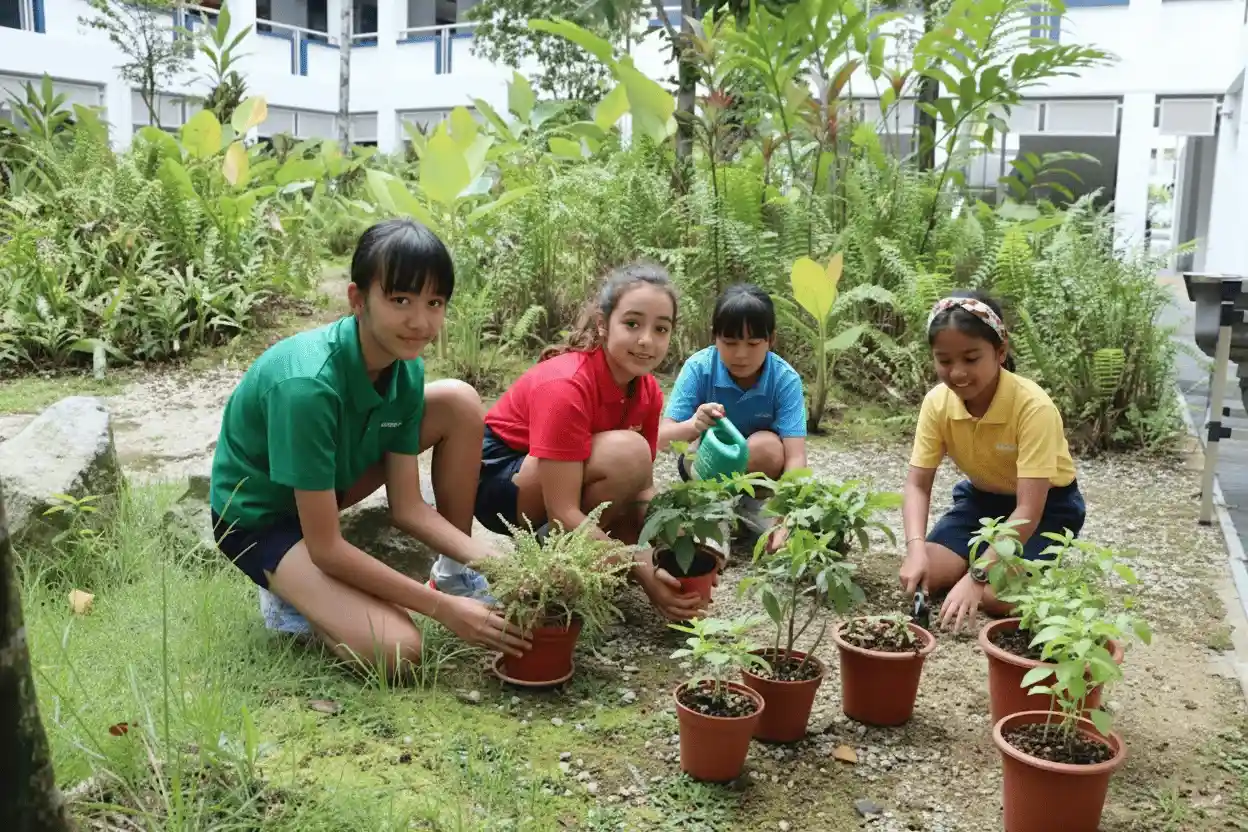
Sustainability has become one of the most pressing priorities of our time, shaping how societies, industries, and institutions operate. For Global Schools Group (GSG), it represents more than an environmental goal; it is a moral responsibility to nurture future generations who will safeguard the planet. As educators, we recognise that our classrooms are powerful spaces where young minds can learn to care for the Earth and lead positive change.
Guided by this belief, GSG introduced the Green School Certification in 2024, a first-of-its-kind in-house sustainability certification model designed specifically for a global K–12 education network. Developed by the GCEE Sustainability Team, the framework provides schools with a structured pathway to integrate sustainability into every aspect of learning and campus life. It empowers students, teachers, and administrators to take collective ownership of environmental stewardship, ensuring that sustainability becomes part of each school’s identity rather than a one-off project.
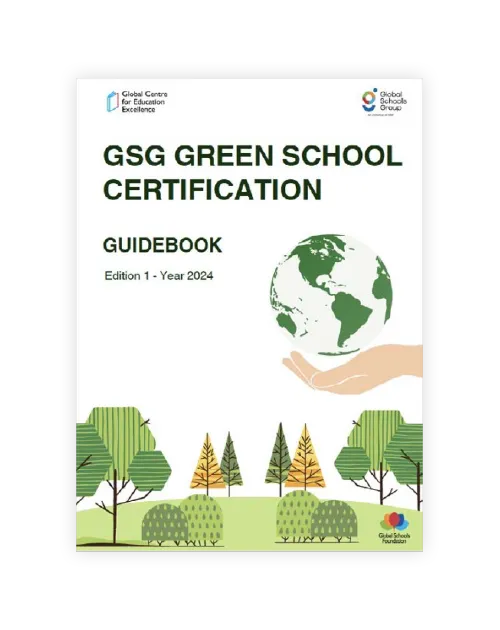

In its first two years, over twenty campuses across Singapore, India, Japan, Malaysia and the UAE, completed the certification journey, achieving an impressive GSG-wide average score of 85%. Seven campuses have attained the highest Eco Champion tier, reflecting deep commitment, innovation, and measurable progress. The results show that sustainability has become not a side initiative but a defining part of school culture across the GSG network.
A Framework that Inspires Action and Belonging
The Green School Certification is built upon five key criteria that capture the essence of sustainable education. Eco Heartware celebrates leadership and teamwork that embed sustainability into school culture. Environmental Management drives energy efficiency, resource conservation, and responsible waste practices. Sustainability Learning ensures that environmental education becomes an integral part of teaching and learning. Community Connect strengthens outreach and partnerships, allowing schools to extend their environmental influence into the wider community. Green Infrastructure ensures that school facilities reflect sustainable design and management practices. Together, these elements transform campuses into living ecosystems of awareness and action. Sustainability becomes visible in gardens, classrooms, corridors, and even policies, proving that real change begins where we learn and live.
Mother Nature: Our Shared Stakeholder
At GSG, sustainability is not treated as a checkbox or requirement but as a relationship with one of our most important stakeholders, Mother Nature herself. Every campus operates with the understanding that education must extend care to the planet that sustains us. From conserving water and energy to protecting biodiversity and reducing waste, each action is an act of gratitude and responsibility. This shared mindset has encouraged students and teachers to see sustainability not merely as a topic of study but as a collective promise to the world they will inherit.


Aligning with Global Goals
The Green School Certification is holistically aligned with all 17 United Nations Sustainable Development Goals. Each of its five core criteria, Eco Heartware, Environmental Management, Sustainability Learning, Community Connect, and Green Infrastructure, directly supports different clusters of the SDGs, ensuring that every aspect of school life contributes to global progress. From clean energy and responsible consumption to equality, education, and partnerships, the framework transforms schools into living examples of the UN agenda in action. Through this alignment, GSG pledges its full support to the international mission of the United Nations, ensuring that its campuses not only teach sustainability but practise it in ways that advance collective wellbeing and planetary resilience.
Empowering Students to Lead the Way
The greatest impact of the Green School Certification is seen in the confidence and creativity it instils in students. Through the framework, young learners are becoming innovators and ambassadors of change. They conduct energy audits, lead recycling drives, design eco-friendly products, and organise community clean-ups. They learn to see science, technology, art, and leadership through the lens of sustainability and purpose.
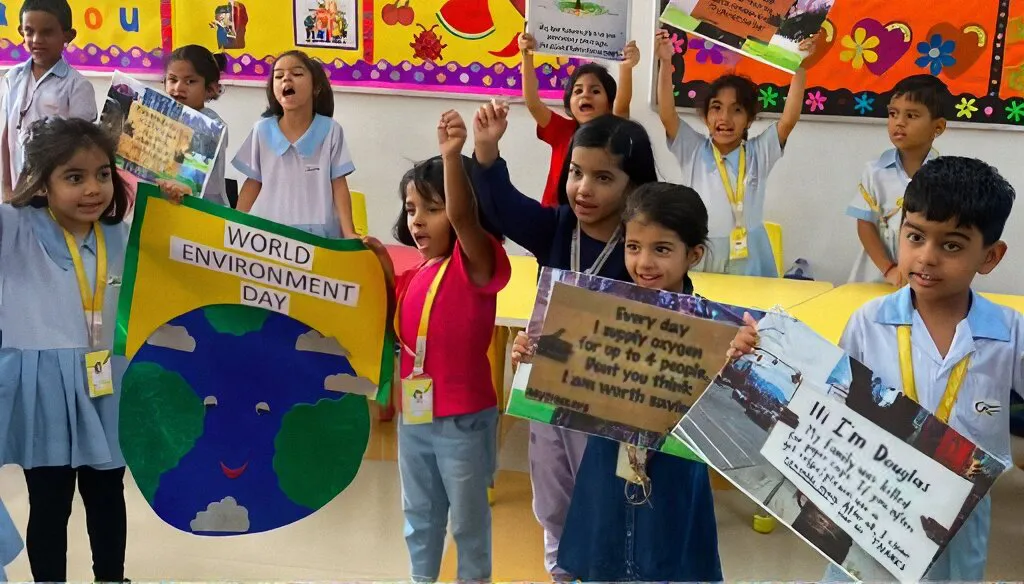
Teachers play a central role as mentors, guiding inquiry-based lessons and hands-on projects that help students connect knowledge with action. The certification has nurtured empathy, discipline, and curiosity, values that prepare students to face complex global challenges with a spirit of optimism and responsibility. Across the network, students now understand that sustainability is not just about protecting the planet; it is about shaping a better quality of life for everyone who shares it.
Extending Sustainability Beyond Schools
The success of the Green School Certification has inspired an expansion of its philosophy into workplaces through the Green Office Certification. Introduced in 2025, this framework brings the same sustainability ethos to GSG’s corporate and administrative offices worldwide. Following the CORE model, Culture, Operational Efficiency, Responsibility and Innovation, and Engagement—it ensures that the organisation’s sustainability values are reflected not only in schools but also in its daily operations.

In October 2025, GIFTech became the first GSG corporate office to achieve Green Office Certification, setting a new benchmark for sustainable workplace practices. Through digital optimisation, waste reduction, and staff-led eco initiatives, GIFTech has shown that a culture of sustainability can thrive in every part of the organisation. Together, the Green School and Green Office Certifications create a unified ecosystem that connects classrooms, offices, and communities through one shared purpose: to make sustainability a way of life.
Looking Ahead
The Green School Certification has evolved into a movement that is reshaping how education interacts with the planet. It has united campuses under a single purpose, cultivated stronger environmental ethics among teachers and students, and embedded sustainability in daily decision-making. As the framework expands in 2026, more schools are expected to join this shared journey, building a network of learners who view sustainability not as an obligation, but as a way of life.
GSG’s commitment extends beyond the classroom. By treating Mother Nature as a true stakeholder and aligning the certification with all 17 United Nations Sustainable Development Goals, the organisation continues to show that every lesson, every project, and every act of care contributes to a collective future. Through education, GSG is nurturing a generation equipped not only to succeed in the modern world, but to heal and sustain it.