Table of Contents
Key Takeaways
- Partnerships between governments and international schools can improve education through teacher training, curriculum alignment, and shared resources.
- Governments should set education goals, while schools contribute expertise and resources.
- Global Schools Group (GSG) draws on experience across 64 campuses in 11 countries.
- Successful partnerships require measurable goals, pilot projects and regular evaluation.
- Transparency, audits and public reporting help ensure accountability.
- Safeguards must protect educational equity, cultural relevance and local needs.
Governments face increasing pressure to meet global education standards, and budget constraints remain a major concern. The Global Partnership for Education is one possible solution. At Global Schools Group (GSG), we believe a well-designed international schools partnership can address capability gaps without undermining the public sector. The government sets the goals, and schools provide the means.
Why Do Partnerships Matter Now?
Policy priorities are increasingly broad: labour market attractiveness, teacher quality, and the need to master IT and foreign languages in education. Given the amount of work required, it is hard to do it independently.
Partnership is something widely used nowadays. UNESCO’s Global Education Monitoring Report states that 94 countries’ sector plans envisage the private sector’s role in providing services and in other spheres.
For policy briefs: partnership works when the state stays in charge of goals and standards.

Which Models of Collaboration Work?
Model | What It Is | Who Benefits | Indicative Cost |
Teacher training exchanges | Shared professional development with public school staff | Teachers and students | Low |
Curriculum and standards alignment | Adapting international frameworks to national requirements | Ministries and schools | Low to medium |
Public-private school partnerships | Campus operations, scholarships, shared facilities | Students and communities | Medium to high |
Research and data sharing | Joint pilots with measurable outcomes | Policymakers and schools | Low to medium |
What Have We Learned Across the GSG Network?
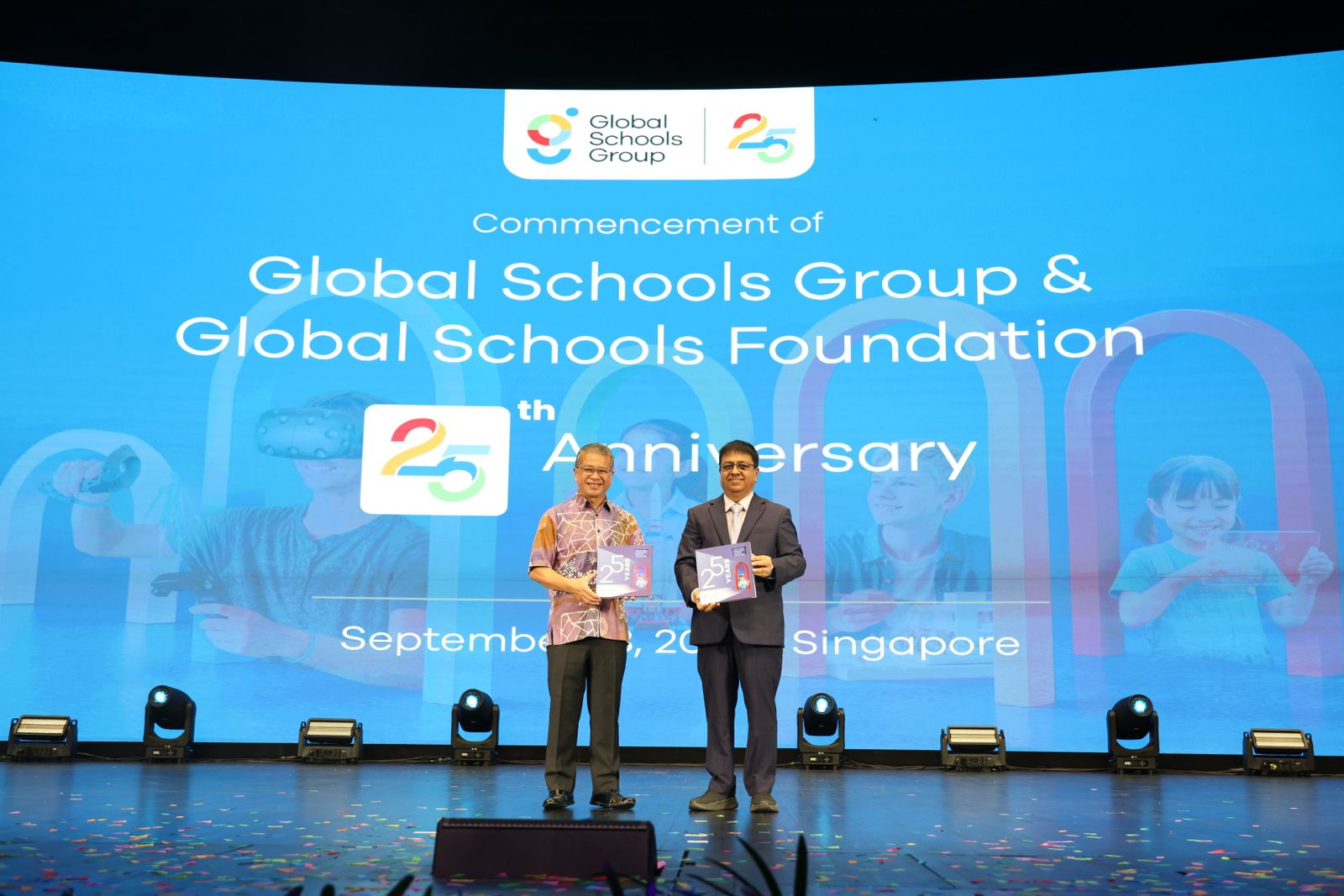
GSG was founded in Singapore in 2002 and now runs 64 campuses in 11 countries. Our curricula include CBSE and ICSE in India, IB, Cambridge, British and American programmes, and national programmes such as the Khmer National Programme. Working across so many systems has taught us a lot about regulation.
Established institutions have joined the network over time, including Vikaasa, a school with roots going back to 1969, in 2022, and Witty Group and Glendale Schools in 2023 and 2024.
Our collaboration with Heath House Preparatory School, which added three campuses in the UK, sits in a very different regulatory setting from our schools in India or Southeast Asia. Each setting has asked us to listen first and adapt second.
- What travels well: Teacher development, assessment practice and multilingual programmes, as our piece on multilingualism in schools shows.
- What needs local adaptation: Curriculum content, language of instruction and regulatory compliance.

How Can Government Bodies Begin?
- Set national objectives first. Partners should help achieve those objectives, not decide them.
- Identify the opportunities that exist. Find out where a partner can provide expertise.
- Implement a pilot project. Determine in advance how you want to measure its success.
- Evaluate the pilot project and come up with any needed modifications
By keeping transparency high at all stages, the government can avoid most controversies. Defining everyone’s responsibilities in advance allows avoiding most problems. Sharing the pilot project results with the public lets other countries benefit from the best practices and mistakes made.
What Risks Need Safeguards?
Concerns are legitimate: equity, cultural relevance, dependence on private providers and accountability. UNESCO notes that regulations are least likely to focus on quality or equity. The needed safeguards include:
- Local needs regarding student achievement and the development of their experiences.
- There should also be regular auditing of the program.
- The program results should also be publicly reported.
- Finally, expect diversity plans.
Conclusion: Start the Conversation
Collaborations work when government institutions set the framework, and schools offer their expertise. We invite governments and education organisations to a meeting. Reach out to us or read more about our company.