
Education today is not what it used to be. The world is evolving at lightning speed and classrooms cannot afford to stay stuck in the past. From digital learning to skill-based education; change is happening everywhere. But the real question is – who actually drives this change?
Spoiler alert: it is not just policymakers. Schools play a massive role in shaping the education system reform. They don’t just follow rules; they bring reforms to life where big ideas meet real students, real teachers and real challenges. Understanding how to reform education system at the ground level starts with looking at what schools actually do differently, day to day.
Understanding Education System Reform
It is the process of improving how education works; what students learn, how teachers teach and how outcomes get measured. But why does it matter so much?
Students today need more than textbook knowledge. They need critical thinking, creativity and adaptability. That is why conversations around what reforms are needed in our education system have become more relevant than ever. Key focus areas include –
- Curriculum updates
- Modern teaching methods
- Smarter assessment systems
- Equal access to education
- Integration of technology
While governments design policies, schools actually make them happen.
Why Schools Are Central to Reform?
Policies may look perfect on paper, but classrooms tell the real story. Schools –
- Act as the ground where reforms get tested
- Provide real-time feedback from teachers and students
- Identify gaps between policy and practice
- Experiment with new learning models
In fact, many successful reforms in the education system start at the school level. A single innovative classroom can inspire changes across the entire system.
How Schools Drive Curriculum and Teaching Innovation?
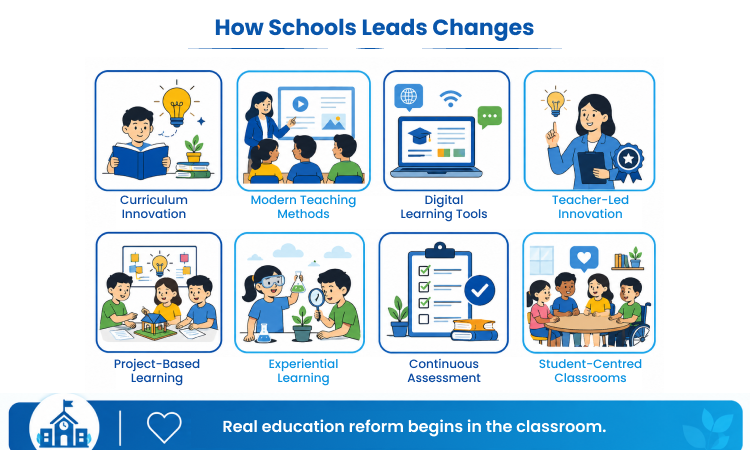
Gone are the days when learning meant memorising textbooks. Today, schools are rethinking how students learn. Here is how they are stepping up:
- Project-Based Learning: Students work on real-world problems, making learning more relevant and engaging.
- Experiential Learning: Hands-on activities help students to understand and explore concepts deeply.
- Curriculum Adaptation: Schools align content according to the needs and interests of students.
- Teacher-Led Innovation: Teachers introduce and use creative methods to make lessons more interactive and engaging.
- Technology Integration: Smart boards, online tools, and digital platforms bring learning to life.
This is exactly how schools answer the big question: how to reform education system in a practical, impactful way.
Role of Schools in Improving Assessment Systems
Let us talk about exams. Traditional systems focused heavily on rote learning. But schools today are changing the game.
- Moving towards competency-based assessments
- Using continuous evaluation instead of one-time exams
- Providing regular feedback to improve learning
- Aligning assessments with real world skills
The goal is to measure understanding and not memorisation. Assessment reform is one of the clearest answers to what reforms are needed in our education system, since how we measure learning shapes how we teach it.
Schools and Equity in Education Reform
Education should be for everyone; not just a privileged few. Schools play a crucial role in making this a reality. They
- Promote inclusive classrooms
- Support students with diverse learning needs
- Bridge the gaps between different socioeconomic groups
- Ensure fair access to quality education
When schools prioritise equity, education system reform becomes meaningful and impactful.
Schools as Innovation Hubs for Reform
Schools are focusing on innovation as they –
- Run pilot programmes to test new ideas
- Collaborate with communities and organisations
- Invest in teacher training and development
- Use data and insights to make smarter decisions
This approach allows schools to lead change instead of waiting for it.
More Reads: The Rise of Personalised Learning in Modern Education Systems
Challenges Schools Face in Driving Reform
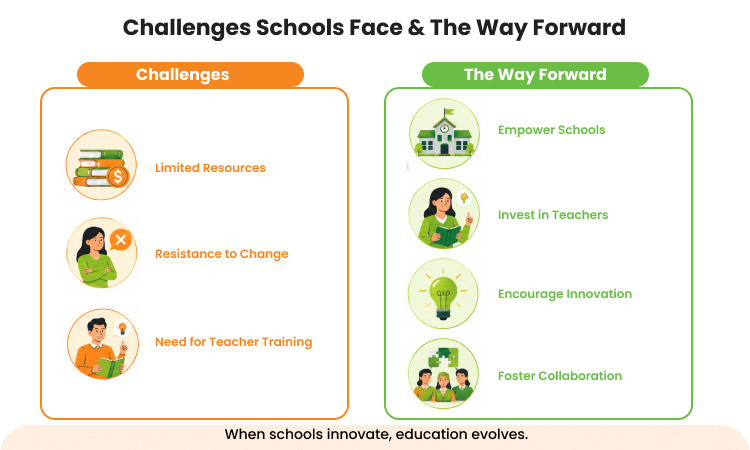
Schools often face –
- Limited resources and infrastructure
- Resistance to change from traditional systems
- Administrative and policy constraints
- Need for ongoing teacher support and training
Despite these challenges, schools continue to push boundaries and drive progress.
How to Reform the Education System Effectively?
Here is the secret –
- Combine policies with innovation
- Give schools more autonomy to experiment
- Invest in continuous teacher training
- Use data and feedback to guide decisions
- Encourage collaboration between policymakers and schools
In short, real change happens when everyone works together.
More Reads: PROMISE V2: A New Benchmark for Accountability in Global Education Management
Conclusion
Schools are not just part of the system. They bring policies to life, shape student experiences and drive meaningful change on the ground. True education system reform does not happen in boardrooms alone. It happens in classrooms where teachers innovate, students engage and ideas evolve into action.
As we rethink what reforms are needed in our education system, one thing becomes clear that schools must lead the way. With the right support, freedom and vision, they can transform education into something that truly prepares students for the future.