Table of Contents
Key Takeaways
- Technology integration in education: The practical use of digital tools and systems to strengthen teaching, not simply the presence of devices in a classroom.
- Well-implemented technology integration is linked to measurable gains in student engagement, personalised learning, and academic outcomes.
- Teachers benefit through richer resources and professional growth, though workload and training gaps remain genuine challenges worth solving.
- School management gains efficiency and data-driven decision-making, provided cost, privacy, and digital equity are addressed head-on.
- GSG's own SmartLearn platform and smart campuses translate this research into daily classroom practice across 64 campuses in 11 countries.
Technology integration in education means embedding digital tools, platforms, and systems into everyday teaching and school operations, not as an add-on, but as infrastructure that improves how students learn, how teachers teach, and how schools run. Done well, the outcomes are measurable: stronger engagement, better access to resources, and more informed decision-making at every level.
What Is Technology Integration in Education, and Why Does It Matter Now?
Technology integration in education is the use of digital tools, platforms, and systems to support and enhance teaching methods - improving access to information, knowledge retention, and student engagement.
If you have ever wondered what is technological integration actually supposed to achieve beyond “more screens in classrooms,” you are asking exactly the right question. According to a 2024 study published in the Global Journal of Educational Thoughts (GJET), technology integration in education is best understood as the utilisation of tools, platforms, and systems to support and enhance teaching methods, resulting in better access to information, improved knowledge retention, and overall student engagement.
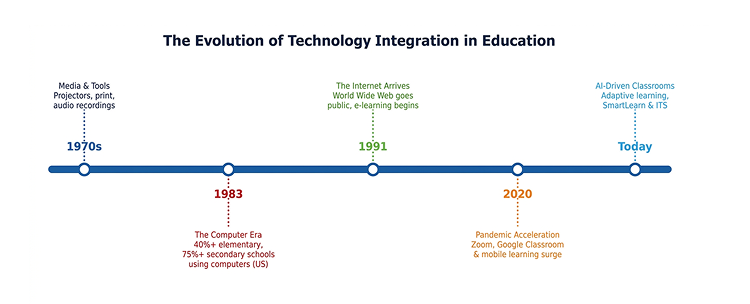
The direction of travel has been consistent for fifty years: technology in education keeps moving from novelty to infrastructure. Today’s AI-driven tools are simply the latest chapter in that same story, one our own team explores further in how AI is empowering students and teachers.
What Problems Are Schools Actually Solving Through Technology Integration?
Before any outcome is possible, it helps to name the actual problem technology integration is trying to fix. Traditional teaching methods often struggle to hold the attention of students raised in dynamic, interactive digital environments. Conventional classrooms can also make it genuinely difficult to personalise pace, resources, or feedback for thirty different learners at once, and school administration built on paper records simply cannot keep up with real-time decision-making.
Technology integration in education addresses each of these directly: gamified platforms and simulations tackle the engagement problem, adaptive learning software tackles the personalisation problem, and Learning Management Systems tackle the administrative bottleneck.
Our detailed research-led guide on the advantages and challenges of technology in education breaks this down further for parents and educators weighing up exactly this question.
What Outcomes Can Students Expect From Well-Integrated Classroom Technology?
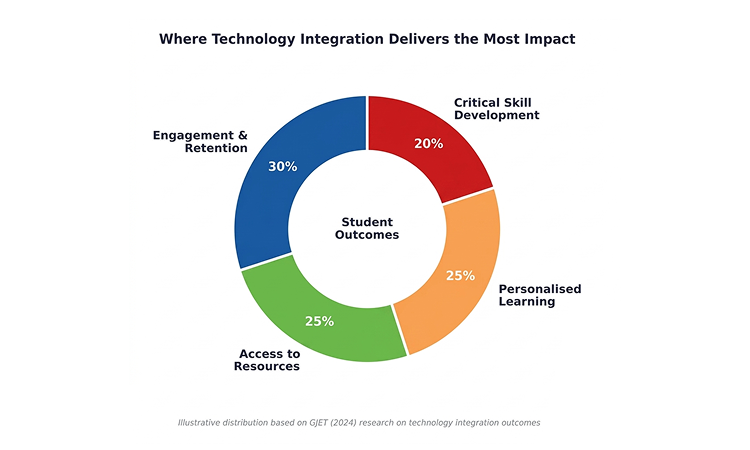
This is where the evidence gets genuinely compelling. The GJET research found that interactive simulations, gamified platforms, and multimedia presentations meaningfully improve student engagement, and that increased engagement is directly linked to better retention and comprehension. Adaptive tools such as DreamBox and IXL, cited in the same paper, use algorithms to assess a student's skill level and adjust instruction accordingly, so each learner genuinely progresses at their own pace rather than a fixed classroom average.
| Outcome Area | What Changes | Why It Matters |
|---|---|---|
| Engagement | Interactive, gamified content replaces passive listening | Higher retention and comprehension |
| Access | Digital libraries and online platforms available anytime | Equal opportunity regardless of location |
| Personalisation | Adaptive software adjusts to individual pace | Stronger academic confidence |
| Critical Skills | Project-based digital collaboration | Real-world problem-solving ability |
As the GJET paper itself concludes, incorporating technology in education provides real, measurable support for classroom learning goals." GSG's 10 current trends in education blog expands on several of these shifts, particularly around Intelligent Tutoring Systems acting as an always-available academic support layer.
What Outcomes Do Teachers Experience When Integration Is Done Right?
Ask any teacher who has taught both with and without reliable classroom technology, and the difference in daily workflow is stark. The GJET research found that technology integration genuinely boosts teacher motivation and self-efficacy, largely because teachers can now visualise and measure student progress directly rather than guessing at it. It also widens access to resources considerably, digital textbooks, interactive simulations, and open-access content that once required significant preparation time to source manually.
That said, the same research is honest about the flip side: keeping pace with constantly evolving tools can meaningfully increase workload, and teachers without structured professional development often feel unprepared rather than empowered. The genuine outcome here depends heavily on support. Schools that invest in ongoing, job-embedded training see teachers thrive; schools that simply hand over new software without guidance risk burnout instead of growth.
What Outcomes Change in School Management Once Technology Matures?
School management has arguably transformed the most visibly. What began in the late 20th century as basic computerised record-keeping has evolved into comprehensive Student Information Systems and Learning Management Systems that support real-time, data-informed decisions. The outcome for school leaders is threefold: streamlined administration, from attendance to scheduling; stronger, more transparent communication with parents and staff; and predictive data analytics that can flag at-risk students early enough to intervene meaningfully, sometimes weeks before a traditional report card would even surface the issue.
None of this is free of friction. High implementation costs, data privacy obligations, and the ever-present digital divide all complicate the picture, a tension we return to shortly. Still, the direction is clear: schools using integrated management systems consistently report better-informed, faster decision-making than those relying on fragmented, paper-based processes, and cloud-based platforms now let administrators access this data from virtually anywhere, freeing up time once lost entirely to paperwork.
How to Integrate Technology in Teaching: What Actually Works
Knowing how to integrate technology in teaching effectively is less about adopting every new tool and more about sequencing a few well-chosen ones properly.
1. Start With the Learning Goal, Not the Tool
Choose technology that solves a specific engagement or comprehension problem, rather than technology for its own sake.
2. Layer In Adaptive Software Gradually
Platforms like those referenced in the GJET research work best when introduced alongside teacher-led instruction, not as a replacement for it.
3. Build In Real Professional Development Time
The research is unambiguous: teachers need structured, ongoing training, not a single onboarding session.
4. Use Data Analytics for Early Intervention, Not Just Reporting
The real value of learning analytics lies in catching struggling students weeks earlier than traditional assessment would.
5. Keep Communication Channels Open With Parents
Digital tools work best when families can see progress in real time, not just at report card season.
What Challenges Still Stand Between Schools and Full Integration?
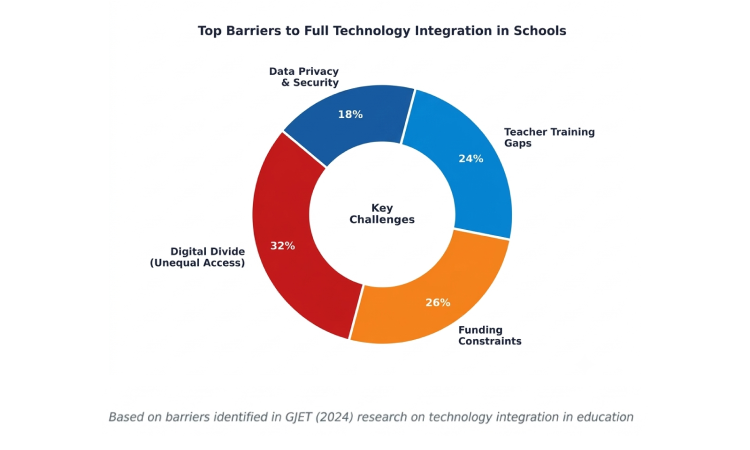
It would be dishonest to present technology integration as a solved problem. The GJET research identifies three persistent barriers: inadequate funding for sustainable technology adoption, a lack of ongoing professional development for teachers, and the digital divide, where students from different socio-economic backgrounds have unequal access to devices and reliable internet at home. Traditional resistance to change compounds all three, since even well-funded schools can struggle if staff and leadership are not genuinely brought into new ways of working.
Data privacy adds a further layer of complexity, with schools now responsible for safeguarding vast amounts of sensitive student data against a rising volume of cyber threats, and regulatory frameworks that demand careful, documented consent processes.
Addressing these challenges genuinely requires policy-level commitment, not just individual school initiative, equitable access programmes, transparent data governance, and sustained investment in teacher training all matter more than any single piece of software. Schools that treat these as ongoing commitments, rather than one-time projects, tend to see the most durable outcomes.
What Does the Future of Technology Integration in Education Look Like?
The next chapter is already being written across the Global Schools Group's own research network. A recent GJET white paper, Smart Learning Reimagined: Digital Pedagogy, AI Integration, and Educational Innovation, explores exactly how AI-driven pedagogy is reshaping classrooms across the network.
As one GSG researcher put it in our internal review of this literature: "the outcome of good technology integration is not a flashier classroom, it is a more confident learner." Emerging tools like predictive analytics and AI-driven administrative systems promise to push school management further still, automating routine tasks so leaders can focus on strategy rather than paperwork.
For a closer look at how generative AI specifically is reshaping one subject area, our piece on how ChatGPT is transforming ESL learning is well worth a read.
How Does GSG Turn Technology Integration Into Real Student Outcomes?
Research is only as valuable as its application, and this is precisely where the GSG Edge comes in. Across our network, the technology-driven SmartLearn system delivers exactly the kind of personalised learning the GJET research points to, accounting for each student's strengths, pace, and interests, and giving teachers actionable insights for one-on-one mentorship. You can explore the thinking behind this system in more depth on our approach to education page.
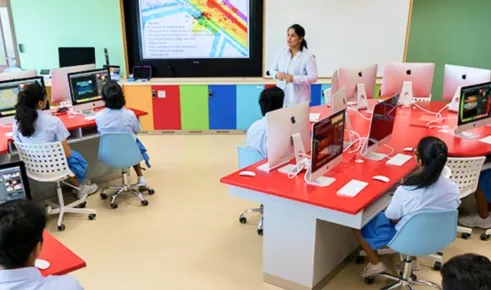
On our smart campuses, this translates into digital classrooms with smartboards, high-speed connectivity, hybrid learning options, and more than 40 skills-based studios, details we unpack fully in how smart schools lead to better learning outcomes. It is a big part of why our smart learning and management systems, paired with a serious commitment to superior pedagogy, have earned the network 600+ awards across categories over the past two decades, recognitions for Technology, Innovation, and Academic Excellence among them.
Conclusion: The Outcome Is the Point
Technology integration in education was never really about the devices. It is about what changes once those devices are used with intention, sharper engagement, fairer access, more confident teachers, and school leadership that can actually see what is happening in real time. The research is clear, and the outcomes are measurable.
If you are ready to see what genuinely integrated, outcome-driven education looks like in practice, explore a GSG campus near you and experience the SmartLearn difference firsthand.
FAQs
What is technology integration in education, simply explained?
It is the practical use of digital tools, platforms, and systems within teaching and school management to improve engagement, access, and outcomes, not technology for its own sake.
How to integrate technology in teaching without overwhelming students or staff?
Start with a specific learning goal, introduce one tool at a time, and pair every new platform with proper, ongoing teacher training rather than a single onboarding session.
Which GSG campuses offer the most advanced classroom technology?
Global Indian International School (GIIS) campuses are widely recognised across the network for their smart campus infrastructure, including SmartLearn-enabled digital classrooms, high-speed connectivity, and 40+ skills-based studios.
Does technology integration actually improve student achievement?
Yes, GJET’s 2024 research links well-implemented technology integration to improved engagement, personalised pacing, and stronger academic outcomes, though quality of implementation matters more than quantity of tools.
What is the biggest barrier to technology integration in schools today?
The digital divide, unequal access to devices and reliable internet, remains the most persistent challenge, alongside funding constraints and the need for sustained teacher professional development.
Author Bio:
Harizah Faiz is associated with the GCEE Research Centre at Global Schools Group, working alongside Shakilah Chandrasegaran of Taylor's International School, and Natasha Nuralanis Zulkipli, Aziah Abdol Aziz, Azman Hariffin, and Macliffton Tembak Sinau of Malaysia's Ministry of Education. Their work focuses on the evolving role of technology within classrooms and school systems, examining how digital integration shapes student achievement, strengthens teaching quality, and supports more effective school management. Together, they authored this study as a practical, research-backed lens on where education technology is genuinely delivering results, and where the real work still lies ahead.