Table of Contents
Key Takeaways
- Innovation prepares students for rapidly evolving careers, industries, and digital workplaces.
- Modern classrooms encourage creativity, collaboration, critical thinking, and independent learning naturally.
- Technology-driven learning improves engagement, accessibility, flexibility, and personalised student experiences significantly.
- Future-ready students need adaptability, leadership, communication, and strong digital literacy skills.
- Teachers play a vital role in driving meaningful educational innovation successfully.
- Innovative education promotes lifelong curiosity, continuous learning, and real-world problem-solving abilities.
- The importance of innovation in education continues to grow as schools shift from exam-focused teaching to skills that prepare students for a changing world.
A few years ago, ‘future ready’ sounded like one of those corporate buzzwords that adults loved throwing around during school seminars. Fast forward to 2026 and it suddenly feels very real.
AI is reshaping industries, remote collaboration is normal and careers are evolving faster. That is exactly why innovation in education matters more today than ever before.
Today, students are no longer preparing for a single predictable career path. They are preparing for a world that demands adaptability, creativity, collaboration and digital confidence. Traditional learning models alone cannot fully support those expectations anymore. Thus, schools must go beyond textbooks and examinations to create environments where curiosity, critical thinking and problem-solving thrive naturally, reflecting GSG's approach to education
Why is Innovation in Education Becoming More Important Today?
Technology is evolving industries at an incredible speed. According to the World Economic Forum Future of Jobs Report 2025, analytical thinking, creative thinking, resilience and technological literacy are now among the most in-demand workplace skills globally.
That shift is reshaping the importance of innovation in education. Traditional classroom models often focus heavily on memorisation and standardised assessments. This is where innovation in education becomes critical to help schools create learning environments that are:
- Interactive
- Flexible
- Technology enabled
- Student centred
- Globally relevant
Education is no longer only about passing exams. It is about preparing students to confidently navigate uncertainty and opportunity.
What Does Innovation in Education Actually Mean?
Education has evolved significantly over the decades. Traditional classrooms once prioritised:
- Lecture-based teaching
- Repetition
- Fixed learning styles
- Teacher-led instruction
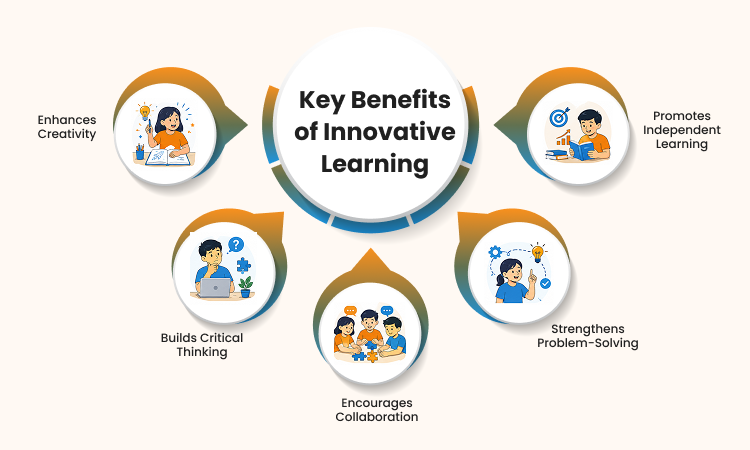
Modern education systems are becoming more interactive and collaborative. Modern classrooms increasingly encourage :
- Student participation
- Creativity
- Problem-solving skills
- Independent thinking
- Group collaboration
- Experiential learning
This transformation reflects a broader understanding that students learn differently when actively involved in the learning process.
More Reads: Why Critical Thinking Matters More Than Marks in Today's World?What Makes Learning “Innovative”?
Innovation in education technology means improving how students learn, engage and apply knowledge. Innovative learning often includes –
- Technology integration
- Project based learning
- Personalised instruction
- Gamified learning experiences
- Real-world applications
- Collaborative activities
The modern education system is moving from learn and repeat to learn, explore, apply, and create.
How Does Innovation Help Create Future-Ready Students?
Why Are Future Skills So Important?
Automation and AI are expected to reshape millions of jobs globally over the next decade. Future workers will increasingly require higher cognitive, technological, and social-emotional skills. This is where innovative education plays a major role in developing future-ready students.
Which Skills Do Students Need for the Future?
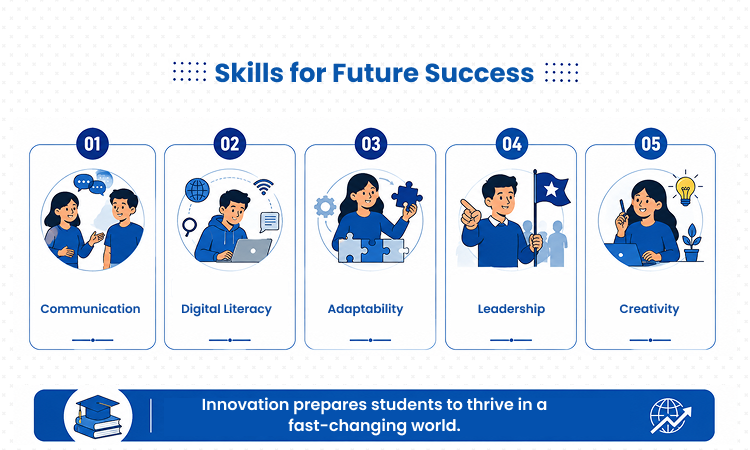
Students require both academic knowledge and human-centred skills; some of them are:
| Future Skills | Why it matters |
| Critical Thinking | Helps students analyse problems independently |
| Creativity | Encourages innovation and fresh ideas |
| Communication | Essential for teamwork and leadership |
| Digital Literacy | Required across nearly every industry |
| Adaptability | Helps students manage rapid change |
| Leadership | Builds confidence and decision-making |
Innovative learning environments naturally encourage these capabilities through hands-on projects, collaboration, and real-world problem-solving.
More Reads: 10 Ways of Innovative Teaching Methods That Actually Improve Learning Outcomes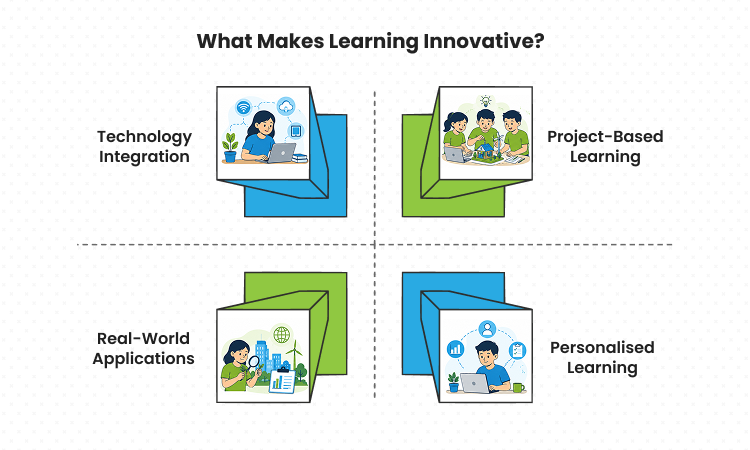
How Does Innovation Improve Student Engagement?
Students engage more effectively when learning feels interactive, purposeful and meaningful. Innovative classrooms often include –
- Interactive discussions
- Simulations
- Digital collaboration
- Creative assignments
- Hands-on projects
These methods make learning feel more dynamic and less passive.
How Does Innovation Support Better Learning Outcomes?
The importance of innovation in education also lies in improving understanding. Students tend to retain concepts more effectively when they:
- Apply knowledge practically
- Collaborate with peers
- Participate actively
- Learn visually and interactively
- Innovation encourages curiosity rather than rote memorisation.
How is Innovation in Education Technology Transforming Classrooms?
What Technologies Are Changing Education Today?
The rise of innovation in education technology is reshaping classrooms globally. Some major technologies transforming education include
- Smart classrooms
- AI powered learning tools
- Virtual reality (VR)
- Augmented reality (AR)
- Online collaboration platforms
- Learning analytics systems
These technologies allow students to experience learning in immersive and personalised ways.
How Does Educational Technology Benefit Students?
Technology-driven learning offers several advantages:
| Technology Benefit | Student Impact |
| Flexible Learning | Learn anytime and anywhere |
| Faster Feedback | Immediate assessments improve progress |
| Personalised Learning | Tailored support for individual needs |
| Accessibility | Better inclusion for diverse learners |
| Collaboration | Easier teamwork across locations |
However, the goal is not to replace teachers with technology. The goal is to enhance learning experiences.
How Are Teachers Adapting to Modern Learning Methods?
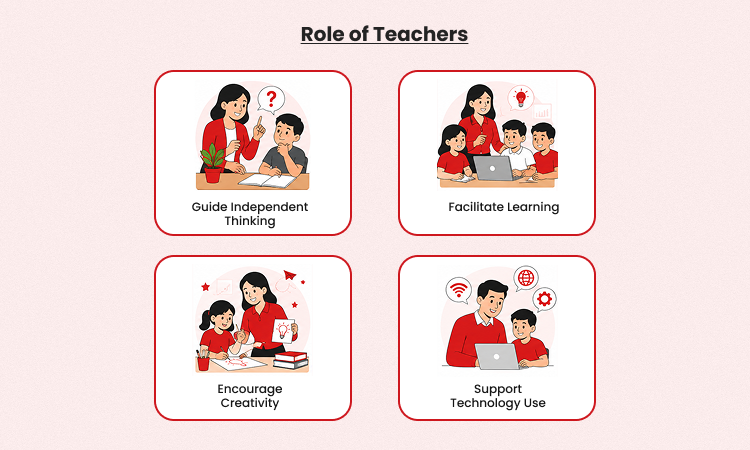
Teachers remain central to educational innovation. Modern educators increasingly act as facilitators and mentors to help students:
- Think independently
- Ask meaningful questions
- Develop confidence
- Use technology responsibly
Why is Teacher Training Important for Innovation?
Innovation becomes successful only when teachers receive strong support and training. Professional development helps educators –
- Learn digital teaching tools
- Build inclusive classrooms
- Improve interactive teaching methods
- Adapt to changing student needs
The best innovative schools invest continuously in the development and training of their teachers because empowered educators create empowered learners. This is the same principle behind investing in leadership and teacher development at every level of a school.
What Challenges Do Schools Face When Introducing Innovation?
Why Can Educational Innovation Be Difficult to Implement?
While innovation brings major benefits, schools may face challenges such as:
- Budget constraints
- Infrastructure limitations
- Unequal access to technology
- Resistance to change
Not every school has immediate access to advanced digital resources or smart learning environments.
How Can Schools Overcome These Challenges?
- Successful innovation requires
- Long lasting planning
- Teacher support
- Balanced technology integration
- Strong leadership
- Inclusive policies
Innovation does not always require expensive tools. Sometimes, small changes in teaching methods create the biggest impact.
More Reads: The Rise of Personalised Learning in Modern Education SystemsWhat Are Some Real-World Examples of Innovation in Education?
- Flipped classrooms where students review lessons before discussions
- Hybrid learning combining online and personal education
- STEM and robotics programmes encouraging experimentation and exploration
- Gamified learning systems increasing motivation
- Experiential projects connecting academics to real world challenges
How Does Innovation Encourage Lifelong Learning?
One of the greatest strengths of innovative education is that it promotes continuous learning. Students learn how to:
- Adapt independently
- Stay curious
- Explore new technologies
- Solve unfamiliar problems
- Innovative classrooms encourage students to become self-motivated learners who remain open to growth throughout life.
Why Will Innovation Continue to Shape the Future of Education?
The future of learning will likely become:
- More personalised
- More flexible
- More collaborative
- More technology-enabled
- More globally connected
At the same time, human-centred education with empathy, creativity, emotional intelligence, and ethical thinking will remain equally important.
At Global Schools Group (GSG), innovation is not treated as a trend; it is integrated into how students learn, collaborate and prepare for the future. Through globally recognised curricula, technology-enabled classrooms, holistic learning frameworks and future-focused education models, GSG empowers students to grow confidently in a changing world.
Get in touch with GSG and explore how the future-ready education transforms your child’s learning journey.
FAQs
1. What is the importance of innovation in education?
Innovation improves engagement, encourages creativity, and helps students develop future-ready skills required for modern careers and evolving industries.
2. How is innovation in education technology transforming classrooms?
Technology enables personalised learning, faster feedback, flexible access, interactive lessons, and better collaboration among students and teachers.
3. What are examples of innovation in education?
Examples include smart classrooms, project-based learning, STEM programmes, flipped classrooms, gamified learning, and AI-supported educational tools.
4. How does innovation in education help students?
Innovative classrooms improve participation, critical thinking, creativity, collaboration, and practical understanding through interactive learning experiences.
5. What skills make students future-ready?
Critical thinking, communication, creativity, leadership, adaptability, and digital literacy are essential skills for future-ready students.