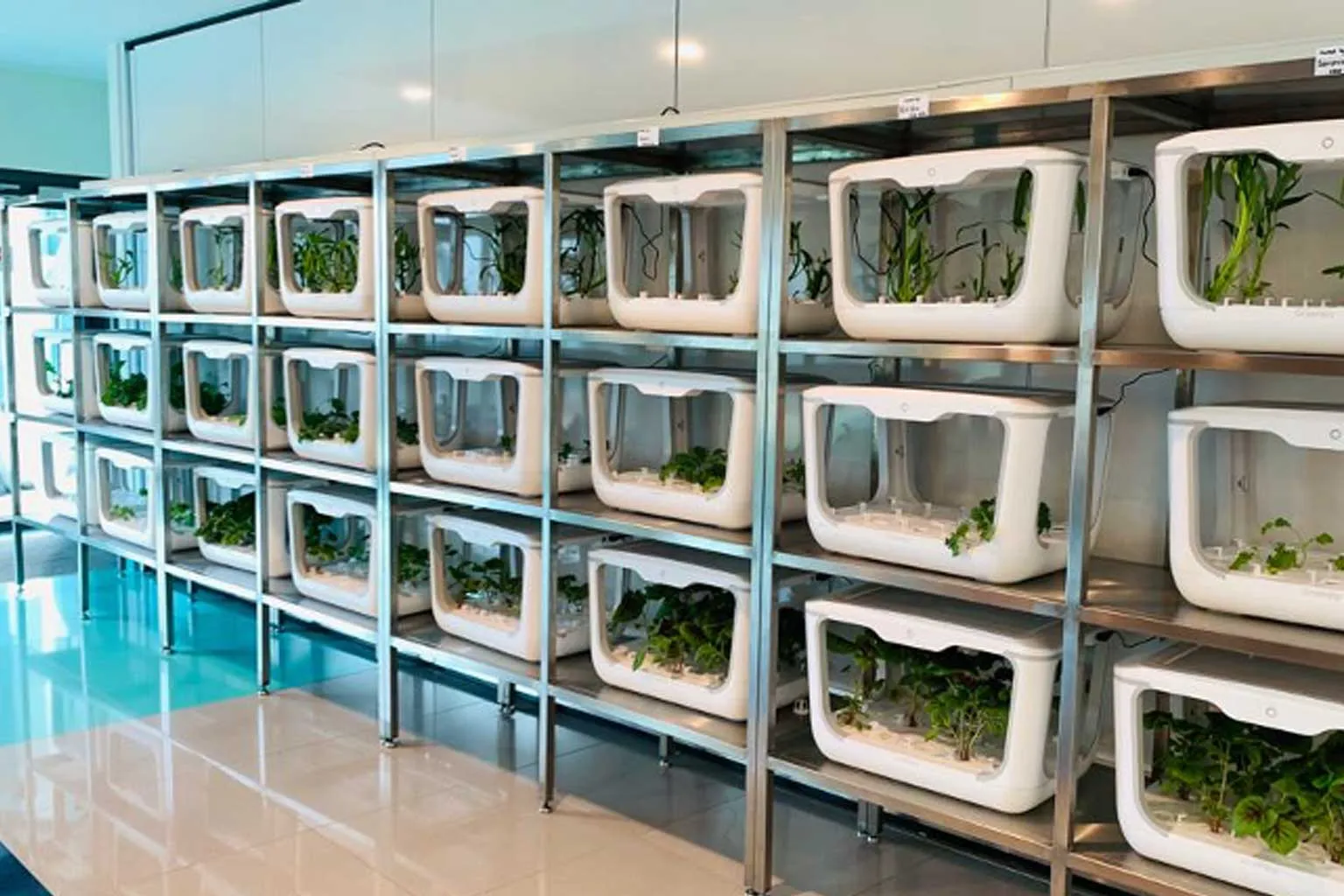
In recent years, the integration of hydroponic systems into educational environments has garnered significant interest. Hydroponics, a method of growing plants without soil by utilizing nutrient-rich water solutions, offers numerous benefits for students and schools alike. From fostering a deeper understanding of biology and ecology to promoting healthy eating habits and sustainability, hydroponics holds immense potential as a valuable educational tool.
Advantages for schools
- Enhanced Learning Experience: Hydroponics offers hands-on learning about plant biology, environmental science, and sustainable agriculture.
- Year-Round Harvests: Grow crops indoors regardless of seasonal limitations, ensuring continuous learning opportunities.
- Resource Efficiency: Hydroponics uses less water, conserving resources and reducing environmental impact.
- Encourages Healthy Eating: Fresh produce grown on-site promotes nutritious eating habits among students.
- Empowers Students: Engaging in hydroponic gardening instils responsibility and environmental stewardship.
Hydroponics for Sustainability
In addition to educational and nutritional benefits, hydroponics in schools align with broader sustainability initiatives. Traditional agriculture often requires large amounts of water, land, and chemical inputs, contributing to environmental degradation and resource depletion. In contrast, hydroponic systems use significantly less water and space, making them well-suited for urban environments and areas with limited access to arable land. By adopting hydroponics, schools can demonstrate environmentally responsible practices and instil in students a sense of environmental stewardship.
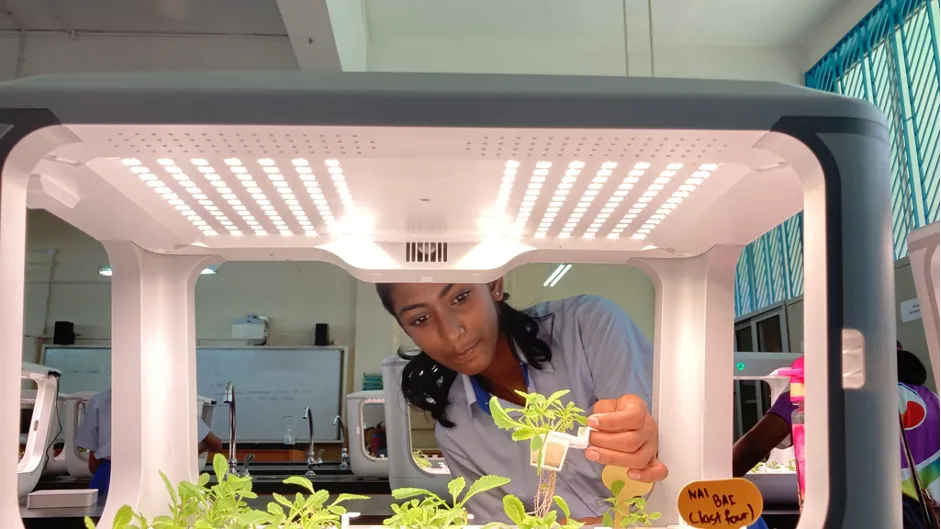
Pic: Student checking plant growth at GIIS EC hydroponics set up
Governments around the world are recognizing the importance of hydroponics in education and are offering support in various forms. For instance, the Singapore government provides grants for hydroponics and vertical farming systems to promote food diversity and security. Similarly, Indian state governments offer training and allowances for hydroponics recognizing its potential to address food security challenges. With India’s hydroponic market expected to grow rapidly, hydroponics could also become an important entrepreneurial skill for children.
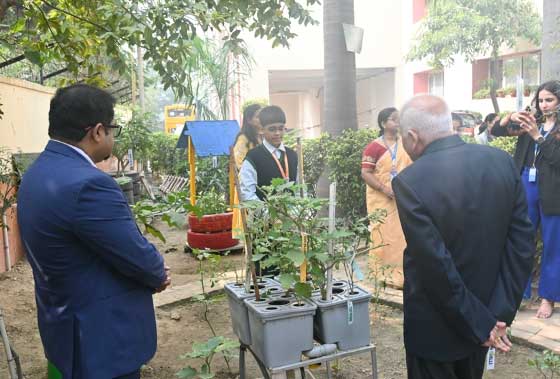
Pic: Students with IMC Assessors showcasing their hydroponics project at GIIS Noida
Important skillset
In our rapidly evolving world, proficiency in hydroponics is becoming increasingly important, with profound implications for agriculture, sustainability, and food security. Beyond agriculture, knowledge of hydroponics also has broader implications for sustainable living, empowering individuals to cultivate fresh produce in diverse settings. Therefore, as we look to the future, proficiency in hydroponics is poised to become not just an important skill but a transformative force driving progress towards a more resilient, sustainable, and food-secure world.
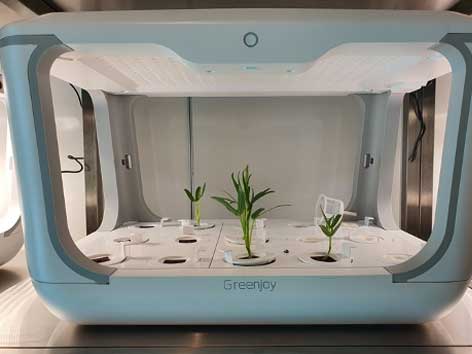
Pic1: Growing plantlets at GIIS PG Smart campus
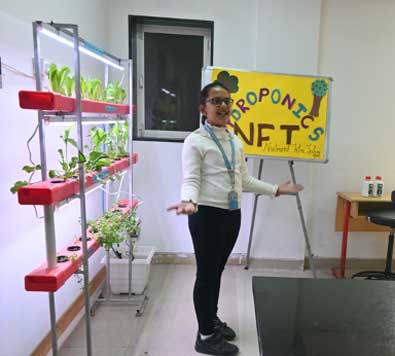
Pic 2: Student explaining Hydroponics set up at GIIS Noida
Hydroponics in our Schools
To showcase the practical application of hydroponics in education, Global Indian International School (GIIS) campuses in East Coast, Punggol, and Noida have launched hydroponics projects. These projects involve the installation of deep water culture (DWC) hydroponic systems, where plant roots are suspended in nutrient-rich, oxygenated water. Typically utilized for growing short-term, non-fruiting crops like leafy greens and herbs, DWC provides an ideal platform for hands-on learning.
These endeavours are designed to provide students with first-hand experience and insights into hydroponic farming, fostering a deeper understanding of science, innovation, gardening, agriculture, and food systems. Through these initiatives, our schools are empowering a generation with the skills and knowledge to address future challenges. Notably, our hydroponic systems have yielded satisfactory harvests, which have been shared among staff and students. Furthermore, we have utilized our produce within the entrepreneurship club, both for sale and to sustain our hydroponic and garden initiatives.
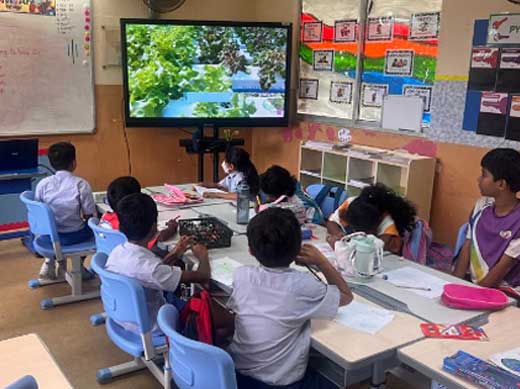
Pic1: Students learning about hydroponics
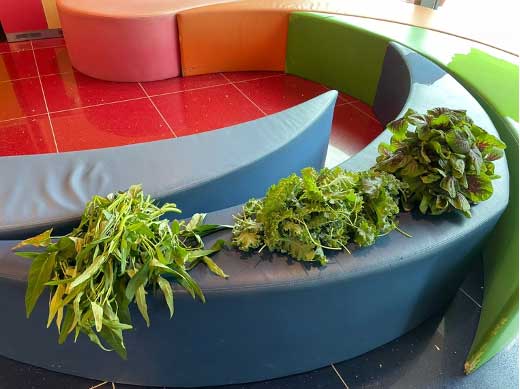
Pic 2: Harvest at our GIIS Smart campus, Punggol
“Grow lights” project in GIIS Smart Campus, Punggol, Singapore
GIIS Sustainability Sphere at Smart Campus Punggol has worked Keeping climate action in mind, its first activity as a club was to set up grow light (hydroponics) systems. They can be used to grow vegetables, fruits and flowers indoors. In households, they keep the air fresh, and in a country like Singapore, where land is limited, maintaining grow light systems brings a mini greenhouse within spitting distance. The club grew curly kale, bayam and kang kong initially. The students keep a log and take photos of their plants regularly to examine their growth. The produce is then successfully harvested and shared with staff and students
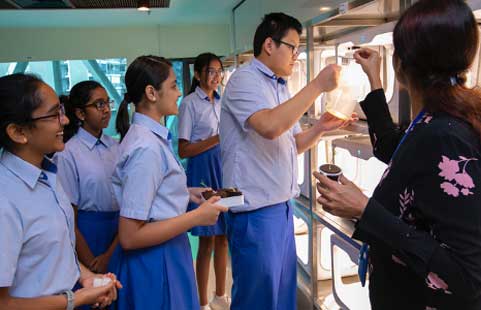
Pic 1: Students setting up their grow lights project
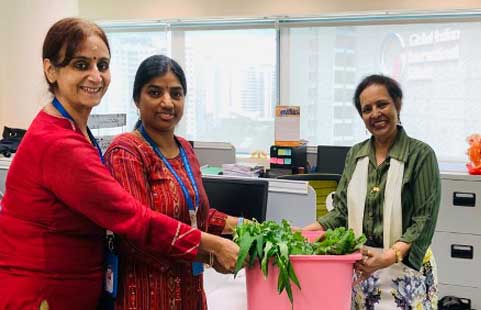
Pic 2: Teachers with harvest
Grow more good at GIIS East Coast, Singapore
GIIS EC’s “GrowMoreGood” Hydroponics initiative has been a big success! It helps students in grades 4 to 10 develop important skills like thinking critically, solving problems, and being entrepreneurial. By getting hands-on with indoor hydroponic gardening, students learn not just about growing plants but also about where food comes from and why it’s important. It’s a fun way to learn! Students really enjoy it and learn to love gardening, science, and eating healthy food. It’s a great start for their future.
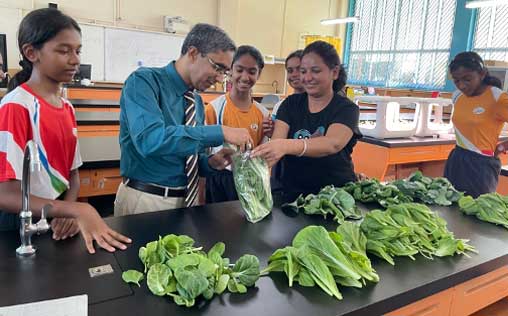
Pic: Students & Teachers with harvest from the hydroponics project
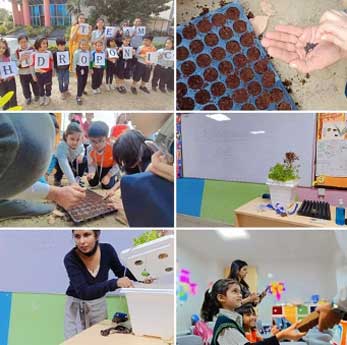
Pic: Hydroponics at GIIS Noida
Hydroponics in GIIS Noida, India
To offer a new age education solution to the food & water crisis the world has been facing lately, GIIS Noida introduced the Hydroponics club for the students to introduce and teach them the principles of the technology and its implementation for a sustainable future. The club encompasses great insights in to concepts of hydroponic farming that allows students to be well versed with light, water and nutrients requirements of the plants. Children get a chance to deep dive in understanding of the science and innovation involved, and improve their knowledge on gardening, agriculture, and food systems.
At GSG, we are promoting hydroponics and striving to involve more schools in this initiative. By showcasing successful implementations and sharing best practices, we hope to inspire more schools to join us in integrating hydroponics into their curricula. Our ultimate goal is to create a network of schools committed to promoting sustainability, experiential learning, and healthy living