Table of Contents
Key Takeaways
- Multilingualism in schools builds communication, adaptability, and cultural awareness for the global workforce.
- Global Schools Group (GSG) operates 64 campuses across 11 countries, offering diverse curricula and multilingual learning approaches.
- Early language exposure builds confidence and encourages practical language use across subjects.
- Cultural projects and international exchanges strengthen cross-cultural understanding and collaboration.
- Teacher training and shared resources help maintain the quality of multilingual education.
- Schools should assess communication, collaboration and adaptability alongside language proficiency.
- Effective multilingual education requires skilled teachers, appropriate resources and balanced timetables.
- Schools and policymakers can prepare students for global careers by introducing languages early and integrating them across subjects.
Employers surveyed for the World Economic Forum’s Future of Jobs Report 2025 expect 39% of workers’ core skills to change by 2030. Many education systems, however, still treat languages as one subject on the timetable, not a way of learning. At Global Schools Group (GSG), we see something different. Across 64 campuses in 11 countries, multilingualism in schools is where communication, adaptability and cultural fluency are practised every day. Our thesis is simple: multilingual classrooms build workplace-ready graduates.
Why Does Multilingualism in Schools Matter Now?
Remote teams, cross-border business and international mobility are now ordinary features of work.
- What employers say: The same WEF report names resilience, flexibility and agility, and leadership and social influence, among the skills employers value most. It does not rank language ability on its own, but these are the skills a child builds when moving between languages and cultures.
- What research suggests: A meta-analysis of 63 studies by Adesope and colleagues linked bilingualism with stronger attentional control, problem-solving and cognitive flexibility. Later reviews found smaller effects, so we treat the evidence as promising, not settled.
Our quotable view: a language is not a subject to be passed. It is a skill to be used.
What Does Our 64-Campus Network Look Like?
GSG was founded in Singapore in 2002. Our schools now offer IB, Cambridge, CBSE, ICSE, American and British curricula, along with national programmes. Multilingual teaching usually takes one of three forms: immersion, bilingual tracks, or language across the curriculum.

What Are the Five Lessons from the Classroom?
- Start early and stay consistent. Early exposure builds confidence that carries into later years.
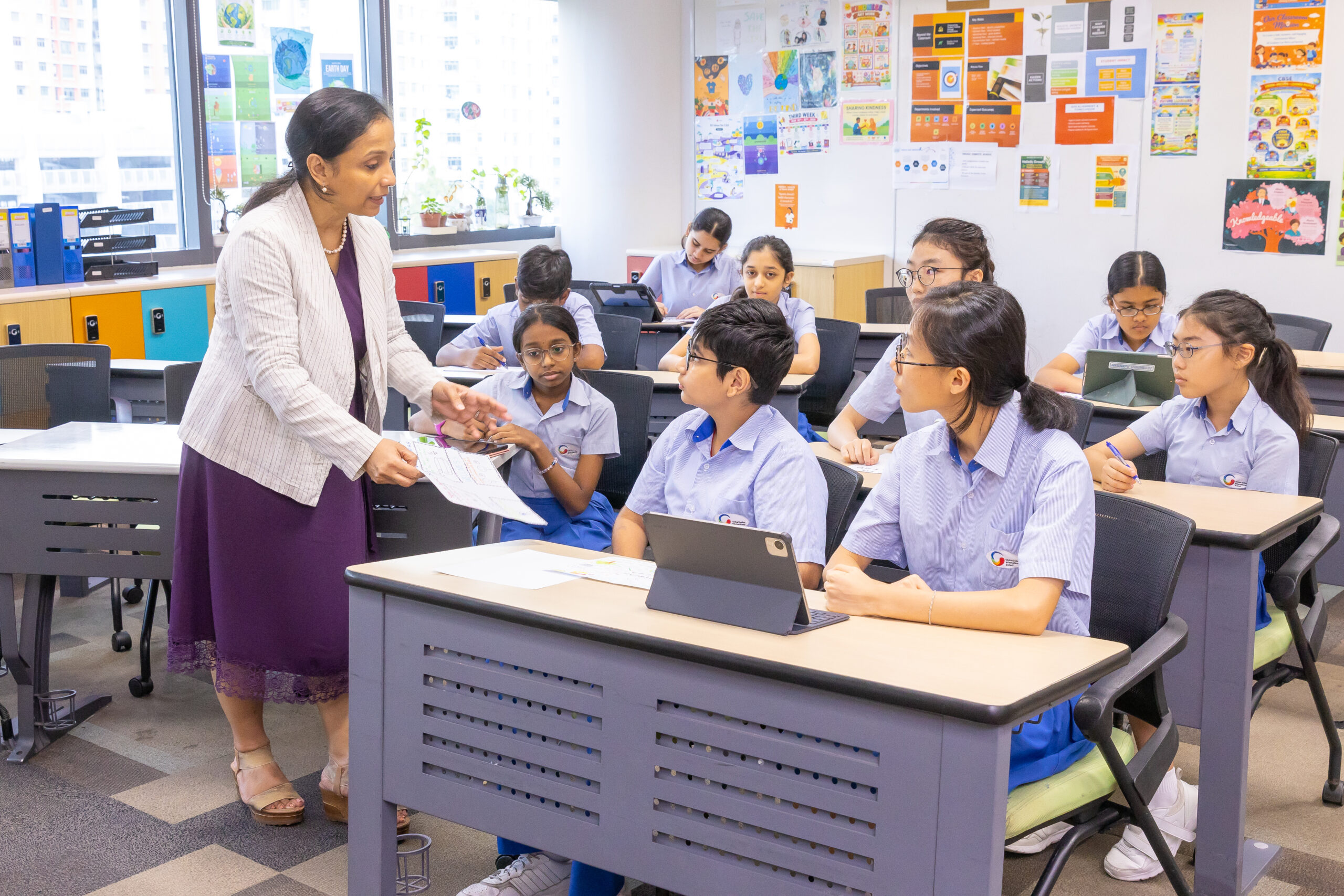
- Teach content in more than one language. A science or art unit can introduce key vocabulary in two languages, so language becomes a tool and not a separate chore.
- Pair language with culture. Projects, exchanges and global collaboration make a second language meaningful.
- Support teachers. Professional development and shared resources across campuses keep quality steady. Our teachers regularly learn from sister schools.
- Measure what matters. Track proficiency, but also communication, collaboration and adaptability.
How Do These Skills Reach the Career Stage?
They show up in university applications, internships and international careers. Our Career Counselling and University Guidance programme helps students reach universities across the world.This is genuine operational discipline behind the growth story, not just scale for its own sake. Explore GSG’s About page for its background and network model.
Which Trade-Offs Do We Face?
We are candid about the costs.
- Language teaching demands time, materials and skilled staff.
- Recruiting teachers who are strong in both subject and language is hard.
- Language hours must be balanced against core subjects.
We address these through shared resources, teacher exchange between campuses and regular review of results.
What Does This Mean for Schools and Policymakers?
- Introduce languages early and use them across subjects.
- Invest in teacher development before adding timetable hours.
- Assess communication and adaptability, not just grammar.
Looking ahead, we expect multilingual education to move from enrichment to expectation, as employers look for people who can work across borders.
Conclusion: Speak to Us
Multilingual classrooms build language, cultural and career skills together. Our network shows that this works across very different schools and countries.
Journalists can request interviews, data, campus visits or high-resolution images. Learn more about us, explore our campuses or contact our team.