Table of Contents
Key Takeaways:
- Sustainability in schools plays a critical role in shaping long-term environmental awareness, habits, and responsible behavior among students.
- Energy conservation remains the most impactful pillar, with schools increasingly adopting efficiency measures and renewable energy solutions to reduce emissions.
- Effective waste management through recycling systems, composting, and the 5Rs framework helps students actively participate in environmental responsibility.
- Water conservation initiatives such as rainwater harvesting and efficient fixtures are essential in addressing growing global water scarcity challenges.
- Green campuses and biodiversity-focused learning environments transform schools into living labs where sustainability is experienced, not just taught.
- Student-led climate action and curriculum integration ensure sustainability becomes a lived practice, making its impact deeper and more lasting.
Schools carry an extraordinary responsibility. They shape not only what students know, but how they choose to live. By embedding sustainability initiatives in schools, educators create something lasting like habits, values, and environmental awareness that stay with young people long after they leave the classroom.
At Global Schools Group (GSG), sustainability is woven into the fabric of how we teach, operate, and grow. Our 2024 Sustainability Report reflects the progress of over 40 schools across 11 countries, tracking real data and real outcomes. These are the five pillars every school can build on.
Energy Conservation and Renewable Transition Energy
1. Energy Conservation and Renewable Transition Energy is where intent becomes infrastructure. In 2024, GSG schools tracked carbon footprints across 36 campuses, up from 25 in 2023, generating the data foundation needed to act. Our group-wide GHG emissions stood at 9,624 MT CO₂, with purchased electricity accounting for 75% of that total, making energy efficiency our single largest lever for change. Students are not passive participants. Through community projects and sustainability challenges, they develop agency and a sense of responsibility that extends far beyond the classroom.

- Schools are upgrading to energy-efficient lighting and HVAC systems, conducting regular energy audits, and tracking usage against targets, turning climate goals into measurable institutional commitments.
- Student-led initiatives like the “Energy Warriors” campaign at OWIS Whitefield embed sustainable practices in schools at a cultural level, making conservation a shared responsibility rather than a top-down mandate.
- GSG is transitioning to solar and other renewable sources, with a target of 25% of campuses achieving carbon neutrality for Scope 1 and 2 emissions by 2030.
More Reads: AI in Schools and the Future of Green Jobs
Waste Reduction and Recycling Programmes
Schools generate significant waste and managing it responsibly is a powerful teaching opportunity. Across GSG, plastic recycling rose to 81% of participating schools, e-waste recycling jumped to 48%, and food waste reduction initiatives expanded to 57% of schools.
- Segregated waste systems, composting programmes, and e-waste recycling bins are active across campuses. At Glendale Academy, Hyderabad, “The Good Food Movement” reduced edible food waste by approximately 70% over six months through student-led monitoring.
- Our 5Rs framework: Refuse, Reduce, Reuse, Repurpose, Recycle- guides culture across all GSG campuses, giving students direct ownership of real environmental outcomes.
More Reads: Building a Greener Tomorrow: The GSG Green School Certification Story
Water Conservation Measures
Water scarcity is a growing global crisis; one that today’s students will inherit. GSG schools track water consumption monthly across campuses, with targets set for each school to promote accountability and continuous improvement.
- Campuses across India and Singapore have installed rainwater-harvesting systems and comply with regional green building standards, thereby reducing dependence on municipal water supplies.
- Emirates American School, Sharjah, implemented drip irrigation, sensor taps, and low-flow toilets, earning first place in the Sharjah Sustainability Project. Student awareness campaigns like the Save Water drive at OWIS Riyadh build habits that extend well beyond the school gate.
More Reads: Nurturing Nature: How GSG School Gardens Inspire Learning & Sustainability
Green Spaces, Biodiversity, and Sustainable Campus Design
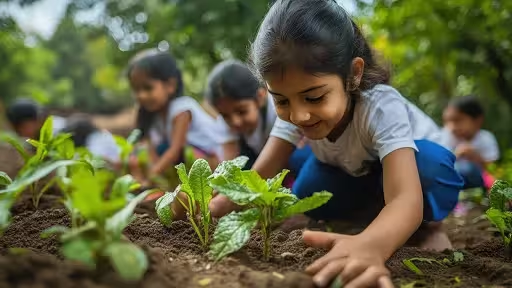
School gardens are not decorative, they are living classrooms. GSG campuses actively maintain green spaces tended by students, integrating biodiversity education into the everyday school environment.
- A student-led Plant Diversity Booklet project, documenting and labelling biodiversity within school gardens, won a 5-Star Best Practice Award at the BPIR International Best Practice Competition in 2024.
- Eco-clubs, butterfly gardens, and outdoor learning zones transform campuses into hands-on sustainability labs. Many GSG campuses are designed with natural ventilation, green roofs, native plant landscaping, and IoT-enabled water-saving systems. At GSG, the campus itself is a teaching tool.
More Reads: Empowering Students for the Future
Curriculum Integration and Student-Led Climate Action
The most durable sustainable practices in schools are not the ones written into policy; they are the ones lived by students. In 2024, GSG campuses conducted 215 UNSDG-linked activities across all 17 global goals, with Climate Action (SDG 13) and Quality Education (SDG 4) drawing the highest engagement.
- The GSG Mock COP, Asia’s first-ever UNFCCC COP simulation for K-12 schools, brought together delegates and educators from 5 countries, reaching 30,000+ students through peer outreach. It was featured in the UNESCO Greening Education Partnership Newsletter ahead of COP29.
- The launch of ESSA (Every Student a Sustainability Ambassador) gives every learner a direct stake in environmental action, building skills in waste management, water conservation, and project planning, while fostering leadership.
- Staff regularly invests in Sustainability training, including a special Eco-Forum for them to share best practices. GSG received multiple international recognitions, including the ACE Award and APQO Special Recognition Award at the Asia Pacific Quality Organisation International Conference.
Why Should Schools Start Now?
The role of schools in environmental conservation and sustainable development goes far beyond the science curriculum. When institutions adopt these five pillars, they can evolve into strong examples of environmental responsibility within their communities.
Sustainability does not demand perfection from the beginning. It simply needs a starting point. Whether it is a school garden, an energy audit, or a student-led initiative, each step contributes to a culture that stays with students over time. Sustainability Reporting at GSG reflects what can be done in practical terms and encourages more schools to begin their own journey.